

Poet, lawyer and 2013 Nigeria Prize for Literature winner, Tade Ipadeola, has urged African writers to take greater responsibility for telling the continent’s stories, insisting that no one can represent African experiences as authentically as Africans themselves.
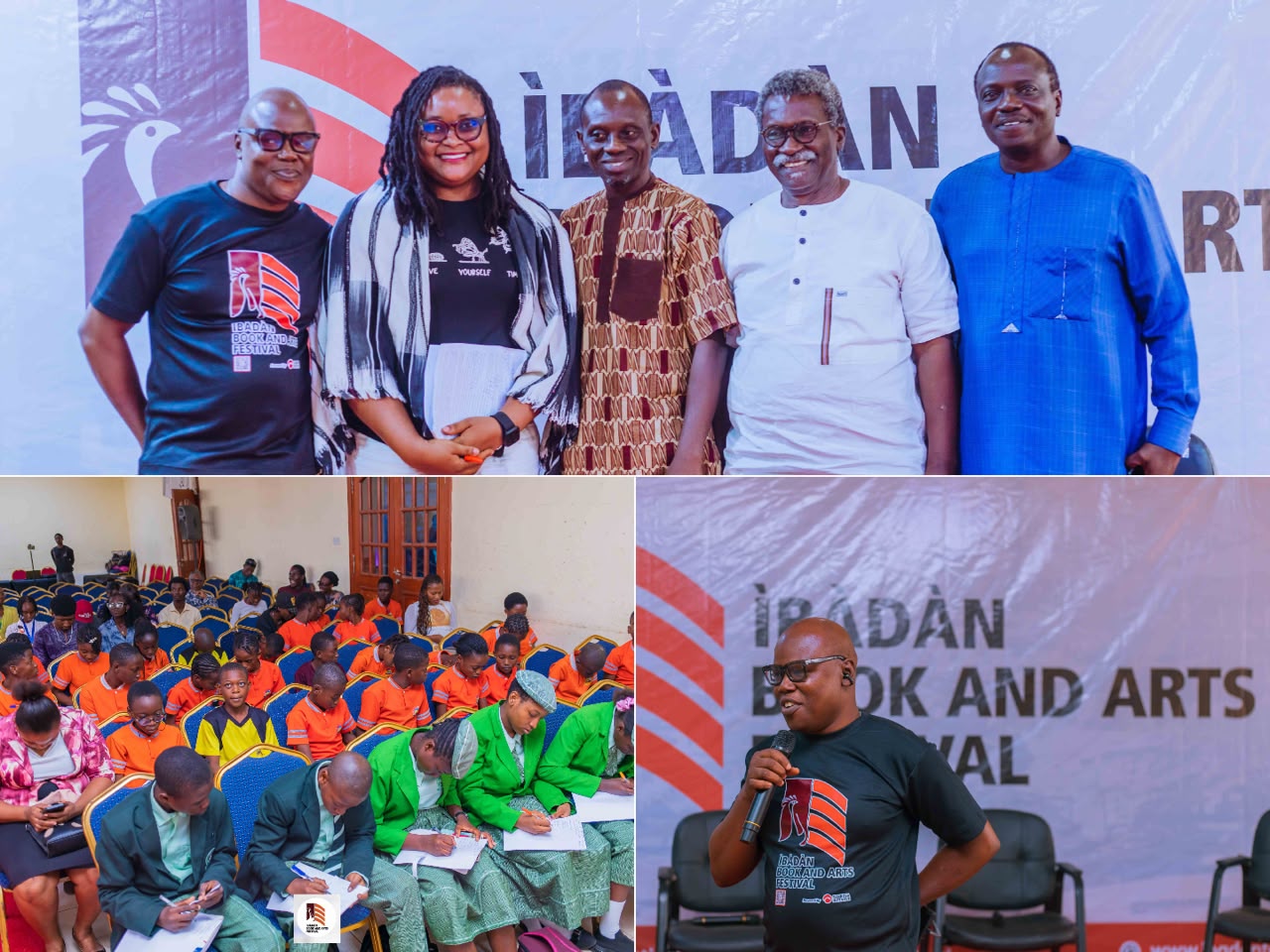
Ipadeola made the call while delivering the keynote address at the second edition of the Ibadan Book and Arts Festival (IBAFEST), held at the Olusegun Aganga Hall, International Conference Centre, University of Ibadan.
Speaking on the festival’s theme, The Stories We Long to Tell, he said Africa’s share of global published writing remained low, citing data from the International Publishers Association which puts the continent’s contribution at approximately six to seven per cent.
He attributed the gap to low literacy rates, weak publishing infrastructure, inadequate library facilities and what he described as authorial extraversion, the tendency of African writers to produce works primarily for foreign audiences.
Ipadeola compared Africa’s publishing environment with India’s Sahitya Akademi, where academics and translators work to make literature available across major languages, helping writers reach large domestic audiences beyond the English-speaking world.
He argued that Africa’s challenge was not a shortage of creative ideas but inadequate publishing infrastructure and cultural confidence.
“No one can tell African stories as authentically as Africans themselves. But we must ask whether we are producing enough literature to tell those stories,” he said.
The poet also cautioned emerging writers against confusing digital visibility with literary achievement and relying excessively on artificial intelligence to produce creative works.
He compared outsourcing the imaginative process to AI to the use of performance-enhancing drugs in sports, urging writers to develop their own creative abilities.
The festival, organised by the Sankofa Initiative for Culture and Development(SICD), ran from October 25 to 31, bringing together writers, students, scholars and cultural practitioners for literary workshops, book conversations, panel discussions and performances.
The final day’s physical programme featured a school session involving students from seven secondary schools, including a creative writing workshop led by poet and educator, Godson Osarenren.
Students also participated in a panel discussion with authors Tobiloba Afolayan, Ayo Oyeku and Christy Butler.
During the session, Oyeku, whose works have been longlisted for the Nigeria Prize for Literature three times, encouraged students to pursue writing regardless of their academic disciplines.
Responding to a question on whether science students could also become writers, he said,
“If you can do the two, you can go further and farther than you can imagine.”
Other sessions examined the relationship between African stories, indigenous languages, technology and contemporary forms of creative expression.
IBAFEST Discussion
At a keynote conversation moderated by broadcast journalist Michael Olatunbosun, Dr Olanike Benette Onimisi, Ipadeola and Dr Tunde Adegbola discussed the importance of cultural identity and indigenous knowledge in African storytelling.
Onimisi argued that young people needed to understand their history and indigenous literature to tell African stories effectively.
Adegbola, whose work focuses on human language technology and the use of information and communication technologies in African languages, maintained that indigenous knowledge could coexist with modern technological innovation.
“History is a story until it becomes our story,” he said.
A separate panel on digital content creation, moderated by Segun Aribisala, featured Afouda Samuel and ’Joba Ojelabi discussing how digital platforms are changing the way Africans tell their stories.
The speakers examined issues including originality, the shift from text-based storytelling to video content and the growing influence of artificial intelligence on creative work.
Earlier activities at the festival included poetry discussions featuring Su’eddie Vershima Agema and Professor Hyginus Ekwuazi, as well as virtual creative workshops facilitated by Romeo Oriogun, Wana Udobang and Stephen Okonkwo.
Renowned musician and poet Beautiful Nubia was also among the featured guests during the virtual book conversations, alongside several Nigerian authors and literary practitioners.
In his welcome address, Festival Director, Servio Gbadamosi, announced three initiatives aimed at sustaining the festival’s impact beyond the annual gathering.
They include the first print edition of Laipo Magazine, expected in December 2026, the IBAFEST Young Writers’ Prize and the IBAFEST Secondary Schools’ Storytelling Challenge.
Gbadamosi said the initiatives were designed to create opportunities for participants to develop their creative abilities beyond the festival.
“These initiatives matter because the long-term value of a festival is measured not only by who attends, but also by what participants are able to do after they leave,” he said.
The festival ended with spoken-word, poetry and open-mic performances anchored by Savvy Bolu. Organisers estimated that more than 900 people attended its various activities across the programme.

Kehinde Ayanboade
Kehinde Ayanboade is the Managing Editor and Publisher of Naija Metro News, with over eight years of experience covering Nigerian politics, crime, legislative proceedings and metropolitan affairs.